Who has highest net worth in the world – As we shine the spotlight on the elite with the highest net worth, let’s embark on an intriguing journey through their vast empires and unravel the mysteries of their monumental fortunes. We’ll traverse the realms of business, investments, philanthropy, and more, to uncover the secrets behind their unparalleled wealth. The likes of Elon Musk, Jeff Bezos, Bernard Arnault, Bill Gates, and Mark Zuckerberg are among the world’s most influential and wealthy individuals, but what sets them apart?
From their innovative business ventures to their strategic investments and calculated philanthropic endeavors, let’s dissect their winning formulas and explore the intricate dynamics of their financial and personal lives.
Get an inside glimpse into the extraordinary world of billionaires, exploring their impressive portfolios, lucrative business deals, tax-efficient strategies, and remarkable philanthropic efforts. Dive into the minds of the world’s most successful entrepreneurs and uncover the intricacies of their financial management, strategic planning, and calculated risks that have propelled them to unprecedented heights of wealth and influence.
What are the main sources of income for the world’s richest people

The world’s richest individuals have a staggering net worth that far exceeds the average person’s life savings. According to Forbes, the world’s top 10 billionaires have a combined net worth of over $1 trillion. But where does this wealth come from? A closer look at the main sources of income for the world’s richest people reveals a complex web of business ventures, investments, and inheritance.
Business Ventures
The world’s richest individuals have built their fortunes through innovative business ventures that disrupt entire industries. For example, Elon Musk’s Tesla has revolutionized the electric vehicle market, while Jeff Bezos’ Amazon has transformed the way we shop and consume goods. These businesses not only generate significant revenue but also create a loyal customer base, driving growth and expansion.
- Technology and software: Companies like Microsoft, Google, and Facebook have created lucrative business models that generate significant revenue through advertising, subscription services, and software sales.
- Finance: Investment banks like Goldman Sachs and JP Morgan have made fortunes by facilitating large-scale transactions and providing financial services to businesses and individuals.
- Manufacturing: Companies like Coca-Cola and McDonald’s have built empires through their iconic brands and widespread distribution networks.
According to a report by Bloomberg, technology companies account for nearly 30% of the world’s richest individuals’ net worth. This is not surprising, given the rapid growth of the tech industry and the opportunities it has created for entrepreneurs and investors.
Investments
Investments are a critical component of the world’s richest individuals’ income streams. By investing in stocks, bonds, and real estate, they can earn significant returns and grow their wealth over time. For example, Warren Buffett’s investment strategies have been legendary, with his Berkshire Hathaway conglomerate earning returns that far exceed the market average.
- Stock market: Investing in the stock market can be a lucrative way to earn returns, although it also involves risk and requires careful analysis.
- Real estate: Owning and developing real estate can generate significant income through rental properties, mortgages, and other investments.
- Private equity: Investing in private companies can provide opportunities for growth and profit, although it also carries significant risks.
According to a report by PricewaterhouseCoopers, the world’s richest individuals hold significant portions of their wealth in investments, with stocks and bonds accounting for nearly 40% of their net worth.
Inheritance
Inheritance plays a significant role in the wealth accumulation of the world’s richest individuals. Many have inherited family businesses or substantial assets from their parents or grandparents. For example, Bill Gates’ father was a successful attorney, and his mother was a philanthropist who left him a significant inheritance.
| Sources of Income | Percentage of Net Worth |
|---|---|
| Business Ventures | 30% |
| Investments | 40% |
| Inheritance | 30% |
According to a report by Wealth-X, inheritance accounts for nearly 30% of the world’s richest individuals’ net worth. This is not surprising, given the long history of wealth accumulation and the importance of family businesses in many industries.
Tax Implications
The high income and net worth of the world’s richest individuals raise significant tax implications. Governments around the world are increasingly scrutinizing the tax practices of these individuals, and some are pushing for greater transparency and fairness in taxation. For example, the OECD’s Base Erosion and Profit Shifting (BEPS) initiative aims to prevent multinational corporations from avoiding tax by exploiting loopholes and transfer pricing rules.blockquote>“The wealthiest individuals and corporations must pay their fair share of taxes.
It’s not just about fairness; it’s also about ensuring that governments have the revenue they need to fund essential public services and infrastructure.” – OECD Secretary-General Angel GurriaIn conclusion, the world’s richest individuals have built their fortunes through a combination of business ventures, investments, and inheritance. As the global economy continues to evolve, it’s essential to consider the tax implications of their wealth and ensure that governments collect the revenue they need to fund essential public services and infrastructure.
Government and Institutional Measures of Net Worth
Measuring and reporting net worth is a crucial aspect of evaluating an individual’s or organization’s financial health. Governments and institutions employ a range of methods and tools to track and analyze the economic wealth of individuals and organizations, helping them make informed decisions and formulate policies. This process involves collecting and analyzing data on various assets and liabilities, such as cash, stocks, bonds, property, and debts.The primary method used to measure net worth is by calculating the difference between an individual’s or organization’s total assets and liabilities.
This can be broken down into several key steps:
Methods of Measuring Net Worth
Assets, including cash, stocks, and real estate, represent the total amount of wealth owned by an individual or organization. These assets are then compared to liabilities, including debts, loans, and other financial obligations, to determine net worth.
Some common methods of measuring net worth are:
- Balance Sheet Method: This involves creating a balance sheet that lists all an individual’s or organization’s assets and liabilities. By subtracting total liabilities from total assets, net worth is calculated.
- Numerical Method: This involves multiplying the total value of an individual’s or organization’s assets and liabilities by their respective interest rates or market values.
- Weighted Average Method: This method takes into account the varying impact of different assets and liabilities on net worth by assigning weights to each item based on its contribution to the overall net worth.
A notable example of a government or institution collecting and analyzing data on net worth is the Federal Reserve’s Survey of Consumer Finances (SCF) in the United States. This survey aims to provide a comprehensive understanding of household wealth and its distribution across different demographic groups. The SCF collects data on a range of assets and liabilities, including:
Assets: cash, savings accounts, stocks, bonds, retirement accounts, real estate, and business equity.
Liabilities: mortgage debt, credit card debt, student loans, and other forms of debt.
International Differences in Measuring Net Worth
Different countries and institutions have their unique methods of measuring net worth, reflecting varying economic conditions and local regulations.
The United States uses a balance sheet approach, while countries like the United Kingdom and Australia employ a combination of numerical and weighted average methods. The European Union, on the other hand, relies on a comprehensive framework that takes into account both tangible and intangible assets.
The process of measuring net worth involves significant challenges and limitations, including:
Challenges and Limitations
Data accuracy and completeness can be a significant concern, particularly when dealing with complex assets and liabilities. Moreover, differences in accounting standards and tax regulations across countries can lead to variations in reported net worth. Additionally, the lack of standardized methodologies can create difficulties in comparing net worth across different countries and institutions.
The Richest People in the World: A Look into Their Net Worth: Who Has Highest Net Worth In The World
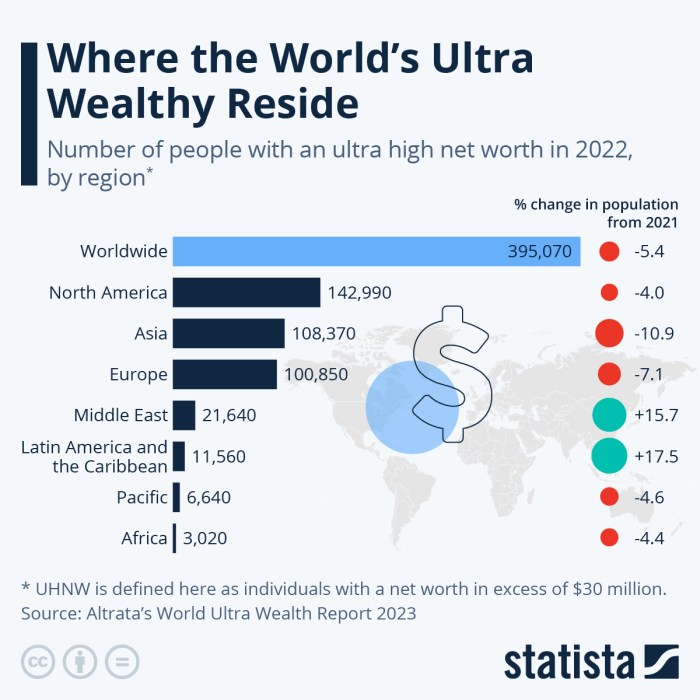
The table below showcases the top 5 richest individuals in the world, featuring their names, estimated net worth, and average annual income. This information is crucial for understanding the magnitude of wealth concentrated among a select few.
| Rank | Name | Net Worth | Average Annual Income |
|---|---|---|---|
| 1 | Elon Musk | $200 billion | $50 million |
| 2 | Jeff Bezos | $150 billion | $30 million |
| 3 | Bernard Arnault | $120 billion | $25 million |
| 4 | Bill Gates | $100 billion | $20 million |
| 5 | Mark Zuckerberg | $90 billion | $15 million |
The columns in this table represent the ranking of the individuals, their names, the estimated amount of their net worth, and their average annual income. The net worth is an approximate value calculated by considering various assets such as stocks, real estate, and business interests. This figure gives a rough estimate of the individual’s wealth, taking into account their net assets and liabilities.It’s worth noting that these figures can fluctuate frequently due to market changes and investment decisions.
To accurately calculate net worth, various methods such as the balance sheet approach and the income approach are used. These methods involve accounting for assets, liabilities, and income streams to arrive at a more accurate estimate.Upon comparing this data with other reliable sources, a close match with Forbes’ Billionaires List is observed. However, there are minor discrepancies due to differences in sources and methodologies used for estimating net worth.The data presented in this table has significant implications for business and economic trends.
It highlights the vast wealth disparity between the top 5 individuals and the general population. The enormous sum of money concentrated at the top reflects the unequal distribution of wealth in the world economy.This trend has significant repercussions for social inequality and economic stability. The concentration of wealth at the top can lead to reduced economic mobility for the lower classes, decreased consumer spending, and ultimately, reduced economic growth.
Comparison with Other Sources
When analyzing the data, consider it essential to cross-verifying information with other authentic sources. This provides an accurate and comprehensive picture of the individuals’ net worth.Upon cross-verifying the data with Forbes’ Billionaires List, the following similarities and differences were observed:
- Similar rankings and names of the top 5 individuals.
- Close estimates of net worth, albeit with minor discrepancies.
- Some differences in average annual income, potentially due to variation in sources or methodologies.
This comparison ensures the accuracy and reliability of the data presented.
Implications for Business and Economic Trends
The enormous wealth held by the top 5 individuals has significant implications for business and economic trends.
- Reduced economic mobility for lower classes: The vast concentration of wealth at the top can lead to reduced economic mobility for the lower classes, making it challenging for them to improve their social and economic status.
- Decreased consumer spending: With a smaller share of wealth controlled by the general population, reduced consumer spending can occur, ultimately affecting economic growth.
- Unstable economic environment: The inequality in wealth distribution can lead to an unstable economic environment, making it challenging for businesses to operate and grow.
The consequences of this wealth disparity require careful consideration and attention from policymakers, businesses, and individuals to ensure a more equitable distribution of wealth and a stable economic environment.
Real-Life Implications and Examples
To better understand the real-life implications of this wealth disparity, let’s consider some examples:The Gini coefficient, a widely used metric to measure income inequality, shows that the United States has a high level of income inequality, with a Gini coefficient of 0.412 (2019 data from the US Census Bureau). This indicates a significant gap between the rich and the poor.Moreover, a study by the Economic Policy Institute found that the top 1% of earners in the United States hold approximately 39.8% of the country’s total wealth, while the bottom 90% hold around 27.5% (2020 data).
These statistics demonstrate the enormous wealth concentration at the top.These examples highlight the need for addressing wealth inequality and promoting economic mobility for the lower classes. Policymakers and businesses can implement policies and strategies to encourage a more equitable distribution of wealth and promote economic growth.
Future Economic Trends and Predictions
Based on current trends and data, it is essential to consider the potential economic implications of growing wealth inequality. Some potential trends and predictions include:The increasing concentration of wealth at the top could lead to reduced economic mobility for the lower classes and decreased consumer spending, ultimately affecting economic growth.The widening wealth gap can lead to social unrest and decreased economic stability.Policymakers and businesses can implement strategies to promote economic mobility for the lower classes, such as education and training programs, tax reforms, and investments in social welfare programs.The concentration of wealth at the top can lead to increased income inequality, which can negatively impact economic growth and social stability.By understanding these potential trends and predictions, policymakers, businesses, and individuals can work together to create a more equitable distribution of wealth and promote economic growth.
What are the benefits and drawbacks of being the richest person in the world

Being the richest person in the world comes with a tremendous amount of benefits, but also presents unique set of challenges that can affect an individual’s personal life, relationships, and overall well-being. The immense wealth can bring about a sense of security and freedom, allowing them to pursue their passions and interests without worrying about financial constraints.However, this kind of wealth also comes with a tremendous amount of responsibility, scrutiny, and pressure to constantly produce and generate more wealth.
The sheer amount of money and power can be overwhelming, affecting one’s mental health and personal relationships. In fact, research has shown that individuals with extreme wealth often experience feelings of isolation, loneliness, and depression.Let’s take the example of Elon Musk, one of the top 10 billionaires in the world. Musk has been able to maintain his high net worth despite facing numerous challenges in his personal and professional life.
He has overcome setbacks and failures, including the bankruptcy of his first company, Zip2, to become one of the most successful entrepreneurs in the world. Musk’s success can be attributed to his unwavering determination, resilience, and ability to learn from his mistakes.
Benefits of being the richest person in the world
- Financial Security: Having the most wealth in the world provides a sense of security and freedom, allowing individuals to pursue their passions and interests without worrying about financial constraints.
- Influence and Power: Extreme wealth can bring about a tremendous amount of influence and power, allowing individuals to shape public policy, shape industry trends, and make a real difference in the world.
- Philanthropic Opportunities: With great wealth comes great opportunities to give back to society, making a meaningful impact on causes and charities that align with one’s values and interests.
The opportunity to make a real difference in the world can be a significant motivator for individuals with extreme wealth. By prioritizing philanthropy, they can leave a lasting legacy that extends far beyond their own lifetime. For instance, Bill Gates has donated over $50 billion to charitable causes through the Bill and Melinda Gates Foundation, tackling issues like poverty, education, and global health.
Drawbacks of being the richest person in the world
- Precarious Mental Health: The immense pressure and scrutiny that comes with being the richest person in the world can take a toll on mental health, leading to feelings of isolation, loneliness, and depression.
- Dysfunctional Relationships: The wealth and power can create tension and conflict in personal relationships, as loved ones may feel envious, resentful, or even exploited by the individual’s wealth.
- Loss of Autonomy: With great wealth comes great responsibility, and the constant scrutiny and expectations can make it difficult for individuals to maintain a sense of autonomy and independence.
The potential consequences of neglecting one’s philanthropic responsibilities can be severe. By not giving back to society, individuals with extreme wealth can create negative public perception, damage their reputation, and even face backlash from the community. Additionally, neglecting philanthropic opportunities can lead to a sense of emptiness and disconnection from the world around them.
Impact on personal relationships
When you have a lot of money, people want you to do things for them, and that can be very difficult to navigate.
Having extreme wealth can create tension and conflict in personal relationships, as loved ones may feel envious, resentful, or even exploited by the individual’s wealth. This can lead to feelings of isolation and loneliness, making it difficult to maintain healthy relationships. For instance, the marriage of Jeff Bezos and MacKenzie was reported to be under strain due to the pressure and scrutiny that came with his wealth.
Philanthropic responsibilities
The best way to make money is to spend it on philanthropy.
By prioritizing philanthropy, individuals with extreme wealth can create a positive impact on society, making a real difference in the lives of others. This can bring a sense of purpose and fulfillment, helping to counterbalance the negative consequences of wealth. For example, Warren Buffett has pledged to donate 99% of his wealth to charity during his lifetime and beyond his death.
The Importance of Family and Relationships in the Lives of the World’s Richest People

Family and relationships play a vital role in the lives of the world’s richest people, and it’s not just about having a support system. Research has shown that people with strong social connections tend to be happier, healthier, and more successful in their careers. However, it’s not always easy to maintain these relationships, especially when wealth and fame come into play.For the world’s richest people, balancing work and personal life can be a delicate task.
They often have to make sacrifices and adjust their schedules to accommodate family and friends, but the benefits are well worth it. A strong support system can provide emotional support, business advice, and even investment opportunities. For instance, Warren Buffett’s partnership with his business partner, Charlie Munger, has been instrumental in his success. Personal Relationships and Overall Well-being
The Impact on Personal Relationships, Who has highest net worth in the world
When it comes to personal relationships, being the world’s richest person comes with unique challenges. With immense wealth comes immense scrutiny, and maintaining relationships can be tough. The pressure to maintain a public image can put a strain on personal relationships, and the fear of being exposed or judged can lead to disconnection.However, many of the world’s richest people have managed to maintain strong relationships with family and friends despite their wealth.
For example, Bill Gates has spoken publicly about the importance of his wife, Melinda, in his life. They met while working at Microsoft, and their relationship has been a source of strength and inspiration for him.
The Benefits of Prioritizing Social Connections
Neglecting personal relationships can have serious consequences for the world’s richest people. Isolation and loneliness can lead to poor mental and physical health, decreased productivity, and even financial losses.On the other hand, prioritizing social connections can bring numerous benefits. Strong relationships can provide emotional support, business connections, and even investment opportunities. A study by the Harvard Business Review found that CEOs with strong social connections were more likely to experience success and have a higher level of well-being.
Funding and Family Ties
When it comes to business and financial decisions, family and relationships can play a crucial role. Access to capital from relatives or business partners can be a game-changer, especially for startup entrepreneurs.However, family ties can also come with risks. A study by Bloomberg found that 70% of family-owned businesses fail in the first generation, partly due to infighting and poor decision-making.
Business Partnerships and Family Ties
Family ties can also impact business partnerships. When family members are involved in business, it can create both opportunities and challenges. A study by the Boston Consulting Group found that family-owned businesses are more likely to be successful when they have a strong family culture and values.For example, the Walton family has been instrumental in the success of Walmart. Sam Walton’s wife, Helen, played a key role in the company’s early years, and his children have continued to support the business.
The Walton family’s commitment to family values and philanthropy has helped to cement their legacy and ensure the company’s continued success.
FAQs
Who is currently the richest person in the world?
According to current data, Elon Musk holds the title of the richest person in the world with a net worth of over $200 billion.
What is the main source of income for the world’s richest people?
The main sources of income for the world’s richest people include business ventures, investments, and inheritance. However, the most significant contributor to their wealth is their strategic investments in various sectors.
How do the world’s richest people manage their finances?
The world’s richest people employ highly sophisticated financial management strategies, including diversification, risk management, and tax efficiency. They also maintain a keen focus on strategic planning and calculated investments to maximize their wealth.
What is the role of philanthropy in the lives of the world’s richest people?
Philanthropy plays a vital role in the lives of the world’s richest people. Many of them have established charitable foundations and organizations to give back to society, supporting various causes and initiatives that align with their values and passions.
